
William the Conqueror Through His Wife Matilda
When travelers hear the name William the Conqueror, they often imagine a formidable warrior crossing the English Channel in 1066 to claim the throne of England.Yet this iconic narrative only tells part of the story.
To truly understand William, the man, the ruler, and the strategist, one must also explore the life and influence of his wife, Matilda of Flanders.
Their partnership was not merely dynastic; it was political, cultural, and profoundly modern in its balance of power. For today’s discerning traveler, this dual perspective transforms a historical visit into a deep, refined, and intellectually engaging journey through Normandy.
A Marriage That Shaped Europe
Matilda was born into the powerful House of Flanders, one of the most influential dynasties in Northern Europe. Her marriage to William was far from a romantic anecdote, it was a calculated alliance that strengthened Normandy’s geopolitical position.
At the time, William was still consolidating his authority as Duke of Normandy. Through Matilda, he gained legitimacy, connections, and increased prestige among European courts.This union laid the groundwork for what would become one of the most transformative events in European history: the Norman Conquest of England.
Matilda was not a passive consort.During William’s frequent absences, especially during the conquest and early years of his English reign, she governed Normandy. She managed ducal affairs, maintained stability, and ensured continuity of power.
This level of responsibility highlights her intelligence, authority, and political acumen, qualities that resonate strongly with modern audiences seeking powerful female figures in history.
The Bayeux Tapestry: Power, Propaganda, and Perspective
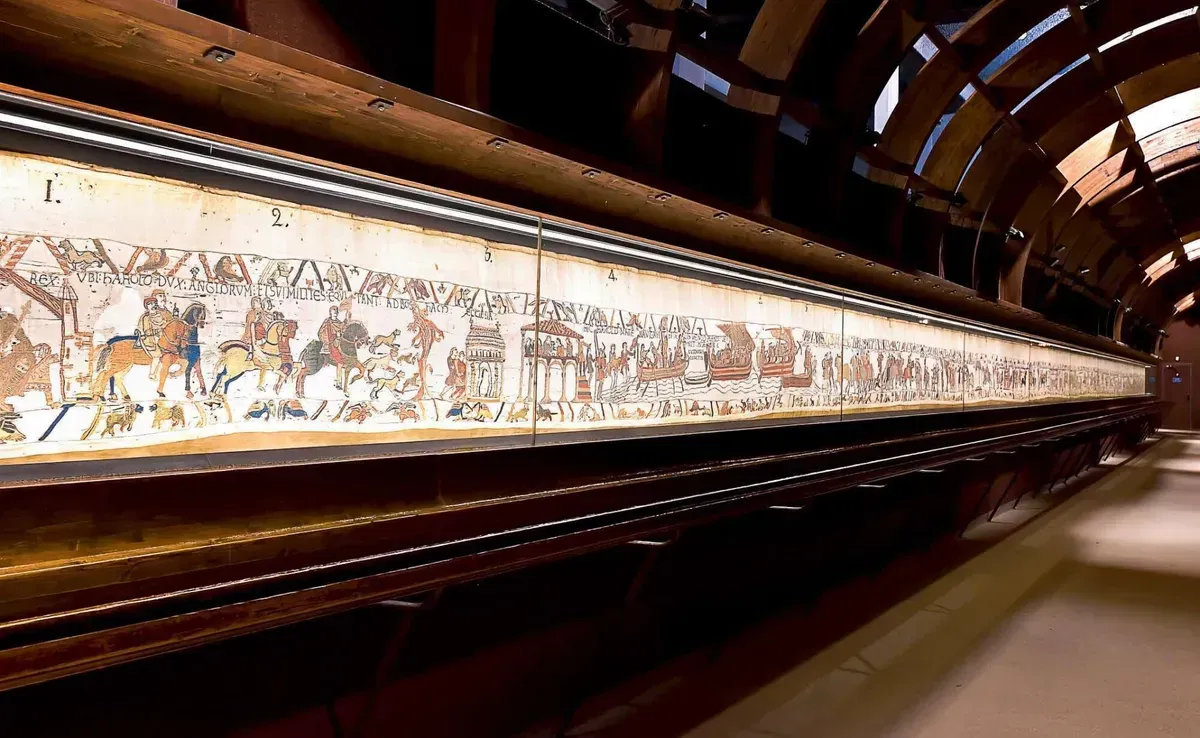
The Bayeux Tapestry remains one of the most extraordinary narrative artworks of the Middle Ages.
Stretching nearly 70 meters (230 feet), it recounts the events leading up to the Battle of Hastings in vivid, cinematic detail.
Although traditionally attributed to Matilda and her ladies-in-waiting, historians now believe it was commissioned by the Norman elite, possibly under the direction of William’s half-brother, Bishop Odo. Still, the artistic and cultural environment in which it was created was deeply shaped by Matilda’s court.


Caen : A Living Testament to a Royal Vision
The city of Caen stands as a powerful symbol of William and Matilda’s shared legacy.
Unlike many medieval rulers, they invested heavily in urban development, religious institutions, and architectural patronage.
- Abbaye aux Hommes, founded by William, now home to his tomb
- Abbaye aux Dames, founded by Matilda, where she was laid to rest
These abbeys were originally built as an act of penance for their marriage (which required papal approval due to consanguinity), but they evolved into enduring symbols of their authority and devotion.
Matilda’s Legacy: The Quiet Architect of Power
While William’s military achievements dominate history books, Matilda’s influence can be seen in more subtle, yet equally lasting, ways:
- The stabilization of Normandy during critical periods
- The transmission of culture and refinement at court
- The shaping of royal imagery and legitimacy
- The education and positioning of their children, who would rule across Europe
She represents a form of
soft power that was essential to the success of the Norman dynasty.
Suggested Experience in Normandy
Imagine a curated day designed around William and Matilda:
- Morning private visit to the Bayeux Tapestry with commentary
- Scenic drive through the Norman countryside
- Gourmet lunch in a refined local restaurant
- Afternoon exploration of Caen and its abbeys
- Private historical insights tailored to your interests
This is not just a tour, it is a bespoke journey into medieval power and elegance.